
As I sit on a plane—delayed on the runway for takeoff due to weather—I’m reading John Mark Comer’s The Ruthless Elimination of Hurry. My eyes move from word to word, processing sentence by sentence, and I’m reminded of something I’ve always carried: I’m a slow reader.
When I was in the seventh grade, I was regularly pulled from my homeroom class to an adjacent room to practice reading. I sat in front of a monitor and read as the words were highlighted, one at a time. With the turn of a knob, the speed of the highlighted words increased. Each session came with a familiar sting—embarrassment, and the painful feeling of being separated from my friends.
I still remember a humbling moment in eighth grade. In English class, everyone had to read aloud. When it was my turn, I came across the word “damn.” It wasn’t a word I used—or typically even read—so when I said it out loud, the way my tongue assumed it would be, I pronounced it “dam-n.” Students giggled. But it wasn’t only them. My teacher’s laughter rose, and then he (his name will remain silent, but it is loud in my mind) corrected my pronunciation. I felt my body sink into my seat, as if my embarrassment could swallow me whole.
Years passed—and even today, I sometimes feel that old thought creeping in: Oh, she’s a slow reader. I want to move my eyes along the page faster. I want to keep up. But when I try, comprehension doesn’t land. And sometimes I catch myself “performing” reading—wiggling my head or thumbing the pages as though I’m racing—when, in my mind, I’m actually taking it in more slowly than others.
And yet, you know what? After years of feeling humiliated or insufficient, I realize it’s okay.
We really are different. We really do have different gifts.
It’s not that slower reading is bad—it’s that it’s mine. I like the full imagery in my mind while I read. I let the characters come to life within me. I pause every few words to marinate on what I’m seeing, what I’m learning, and what it means. That might look slow to someone else, but it’s meaningful to me. The hurry never carried me anywhere. But taking my time—staying in my lane and at my own pace—has an advantage. I soak it in. I visualize. I comprehend better.
My husband reads much faster than I do, and he retains what he reads so well. There have been times I’ve compared myself and felt insufficient. But I’ve learned that we are all made differently—and I’m okay with the pace God gave me.
My mind wonders. I have “squirrel” moments. I pause to imagine. To think.
Now that I reflect on it, I live my life in similar ways.
Hurried reading—or hurried living—doesn’t serve me. But a slower pace—soaking it in—does. I enjoy reading slowly because it makes room for understanding, and it allows me to stay present with the words in front of me.
“Enthusiasm without knowledge is no good; haste makes mistakes.” Proverbs 19:2

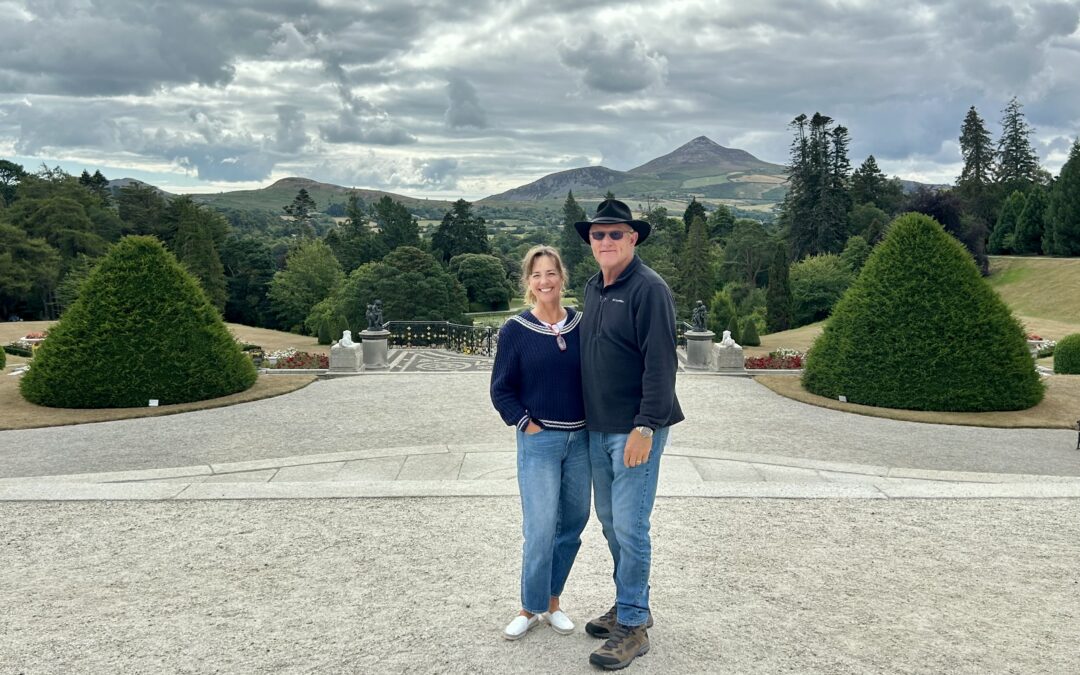
These roses at Powerscourt Estate in Enniskerry, Ireland were beaming with fragrance and beauty. The “stop and smell” were a must.
So I want to encourage you—if you recognize yourself in any of this—to apply it to life. Slow your roll. Take it easy. Stop and smell the roses. Use whatever phrase helps you remember the truth: we’re all unique, and we’re made with purpose. And when the noise of hurry tries to rush you past what matters, choose stillness and remember, He is God.